
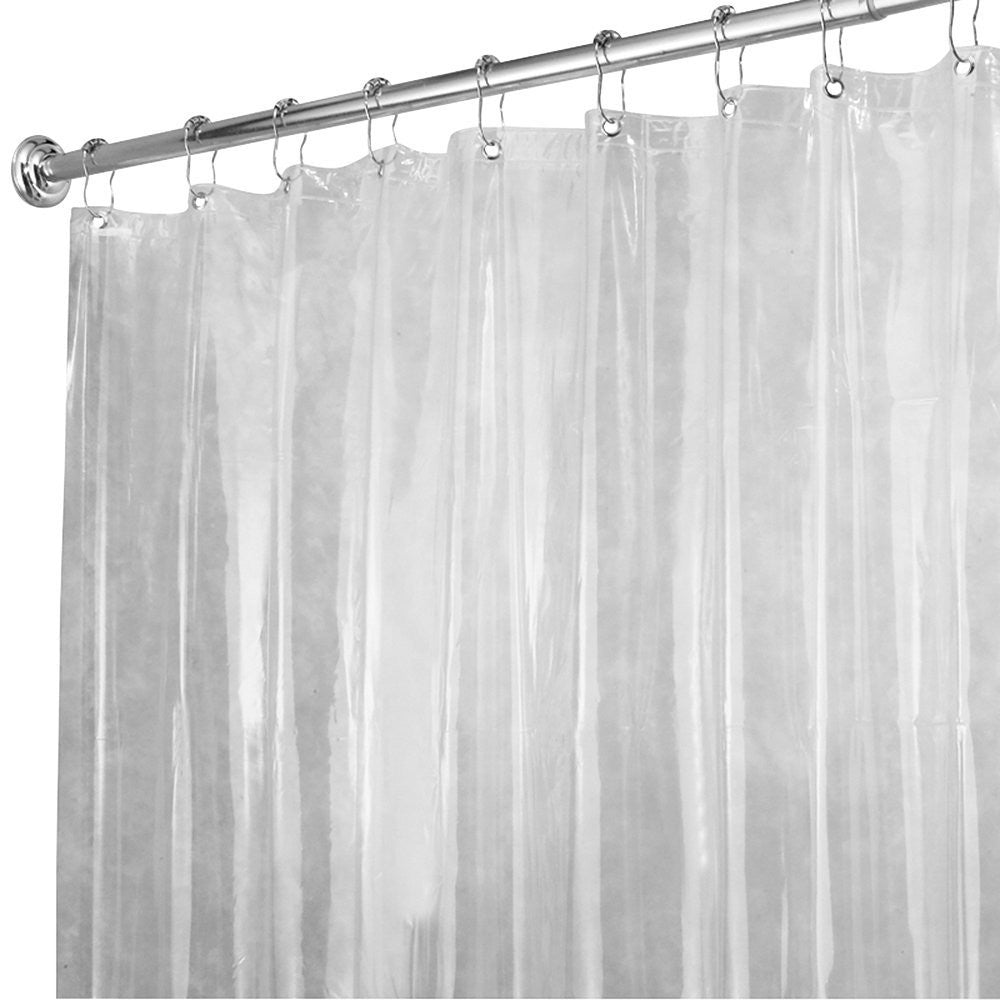
Revestimiento de ducha resistente al moho – Transparente
Precio de ventaDesde 16.95

Cortina/Forro de ducha de Eva InterDesign – Escarchado – 72" x 72"
Precio de venta19.99
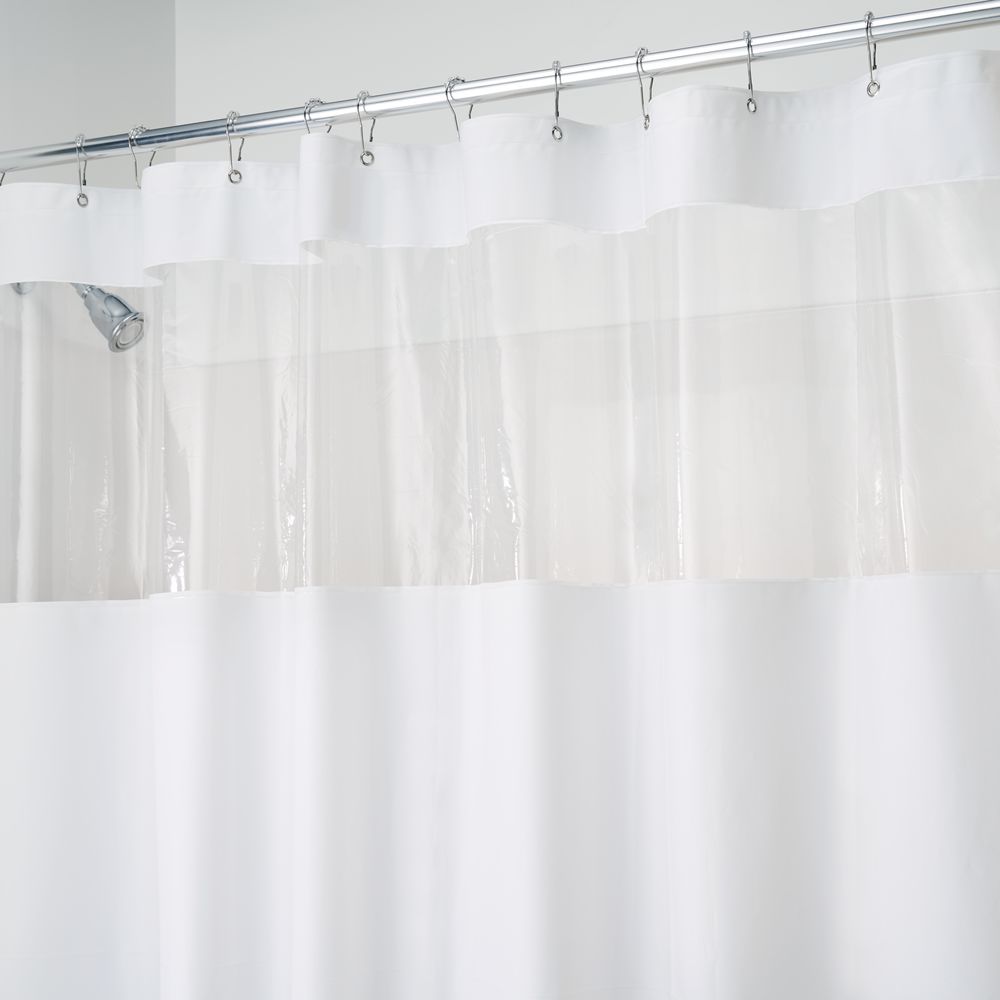
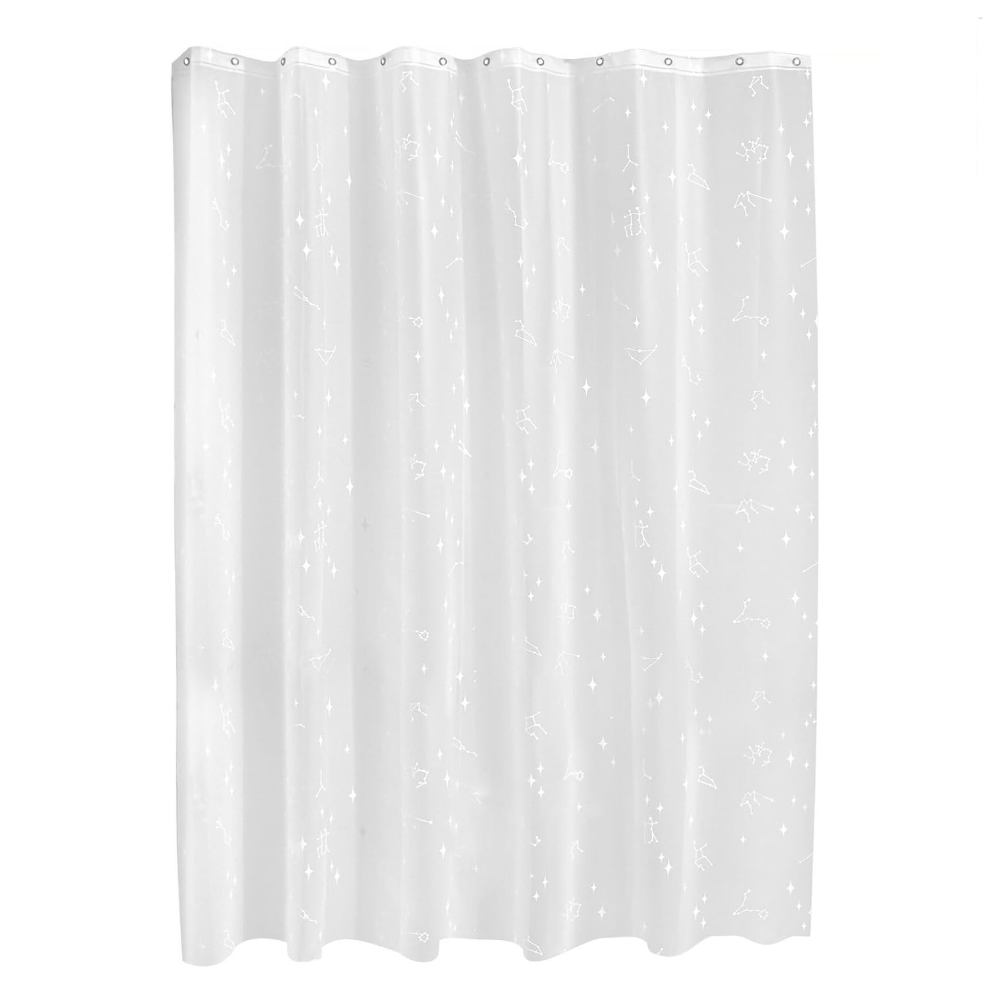

IDesign Cortina de ducha de PEVA resistente al agua – Constelación – 183 cm x 183 cm
Precio de venta24.95
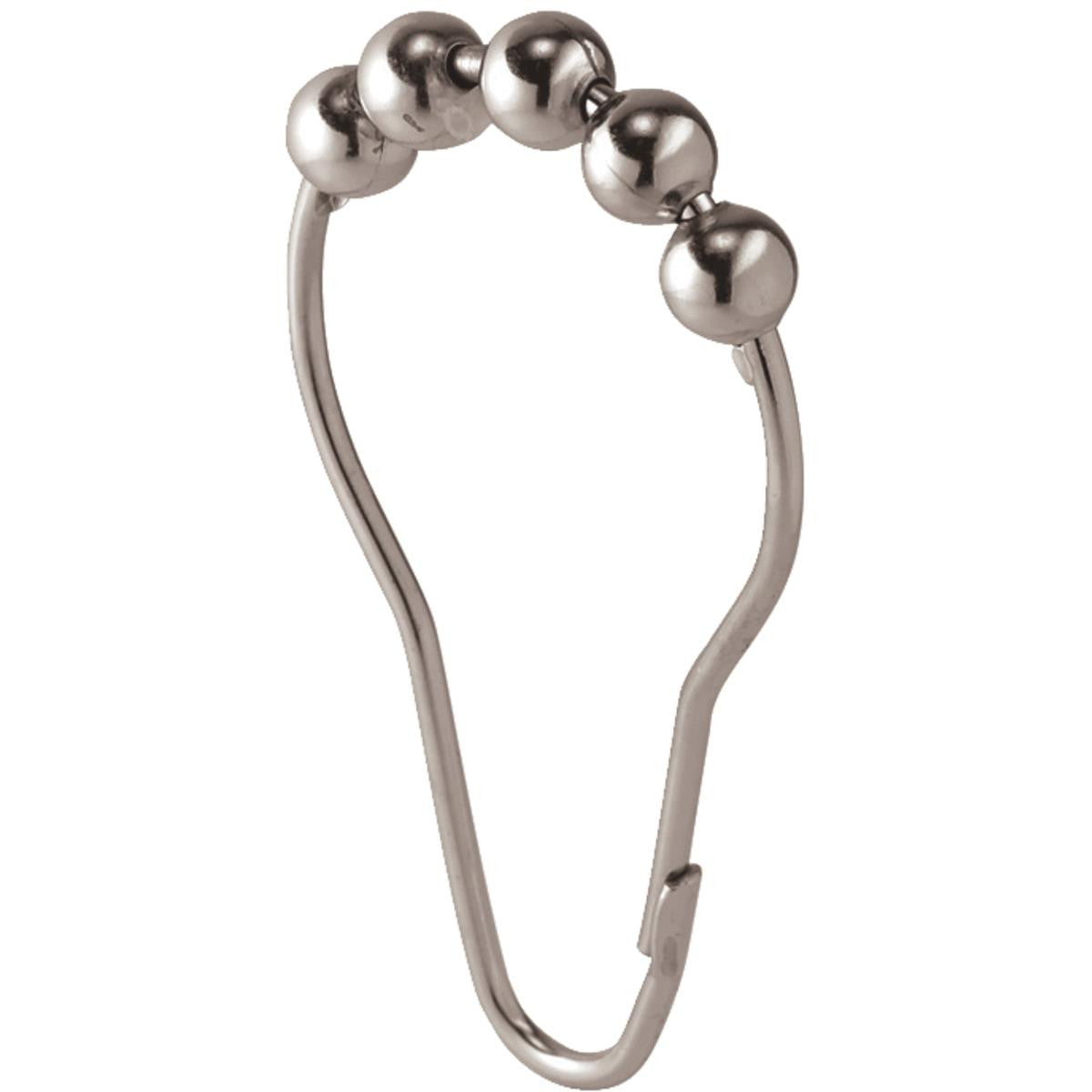
Anillas de rodillo de acero para cortina de ducha – Paquete de 12
Precio de venta12.95
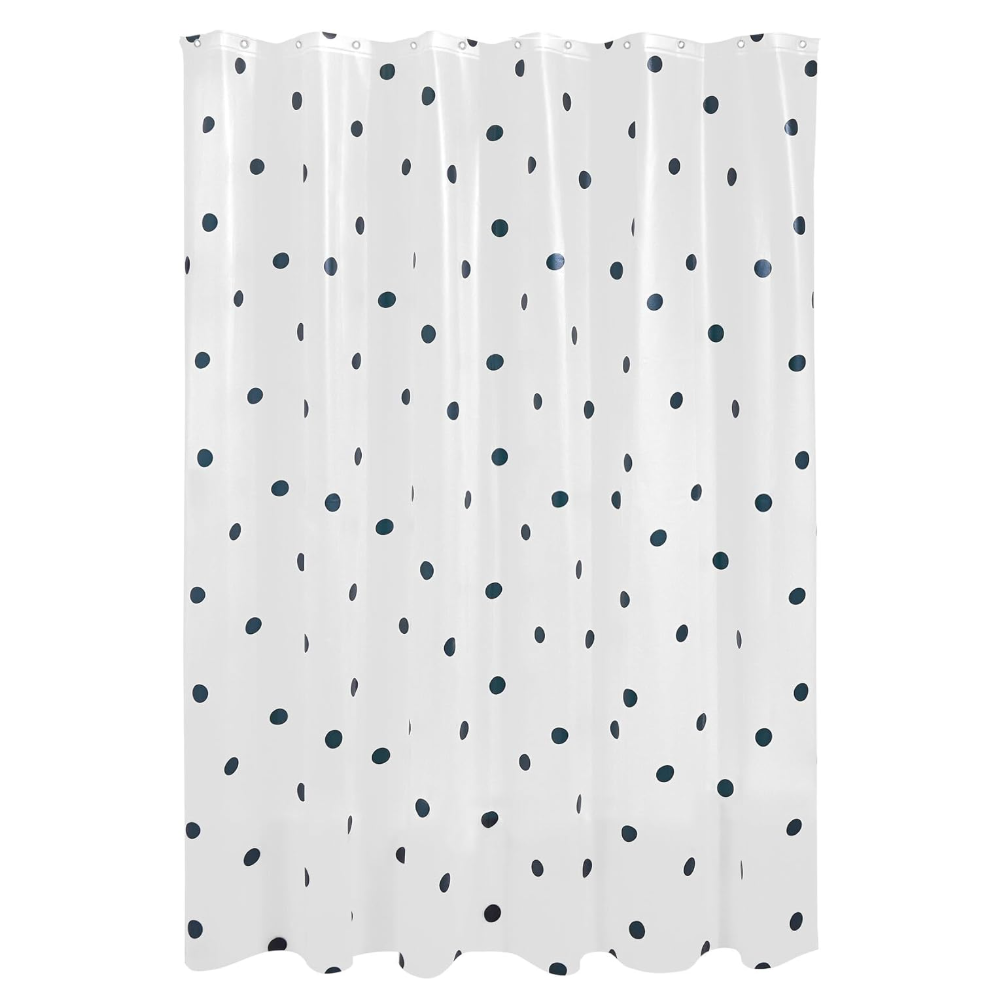
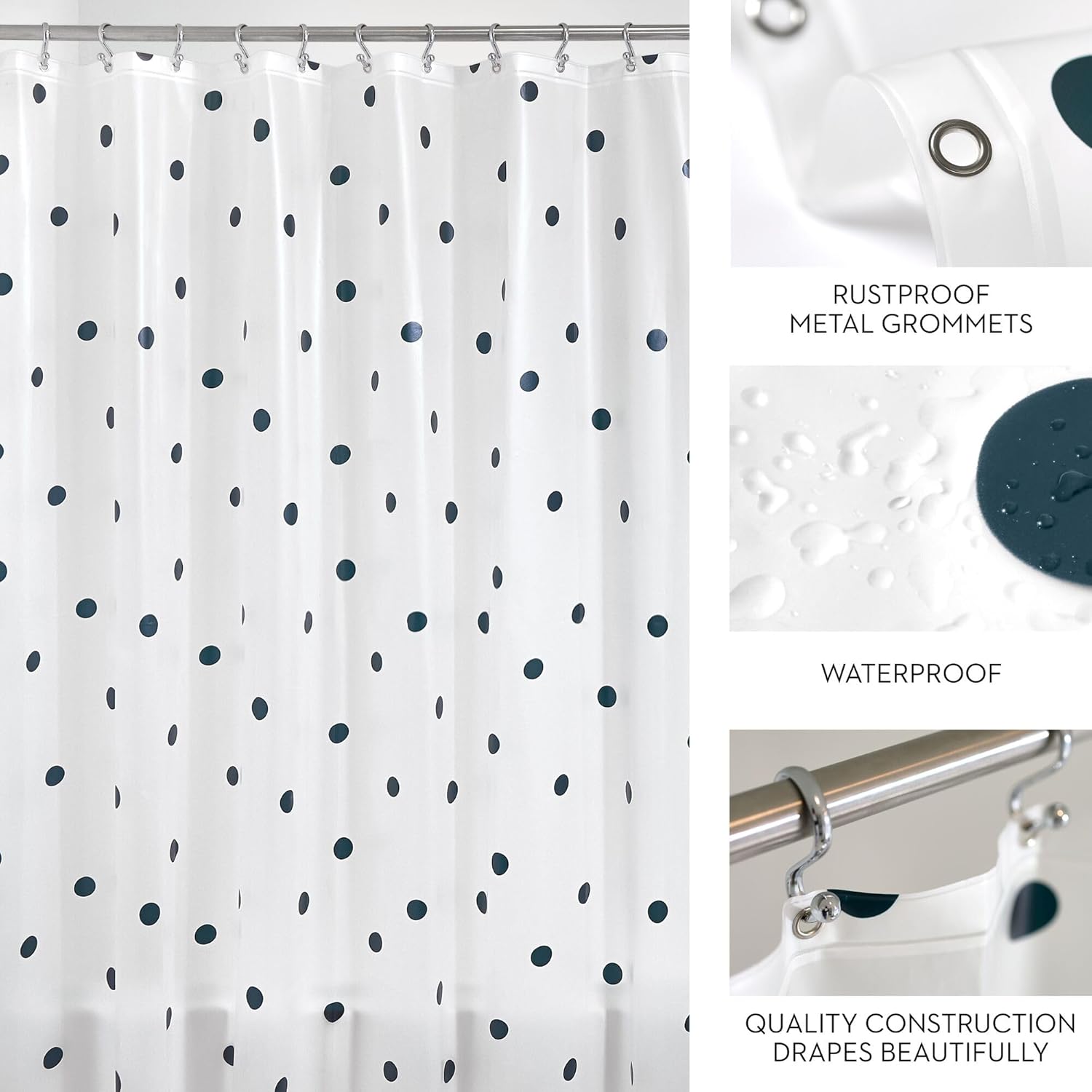
Cortina de ducha de PEVA resistente al agua iDesign – Puntos negros – 72" x 72"
Precio de venta24.95


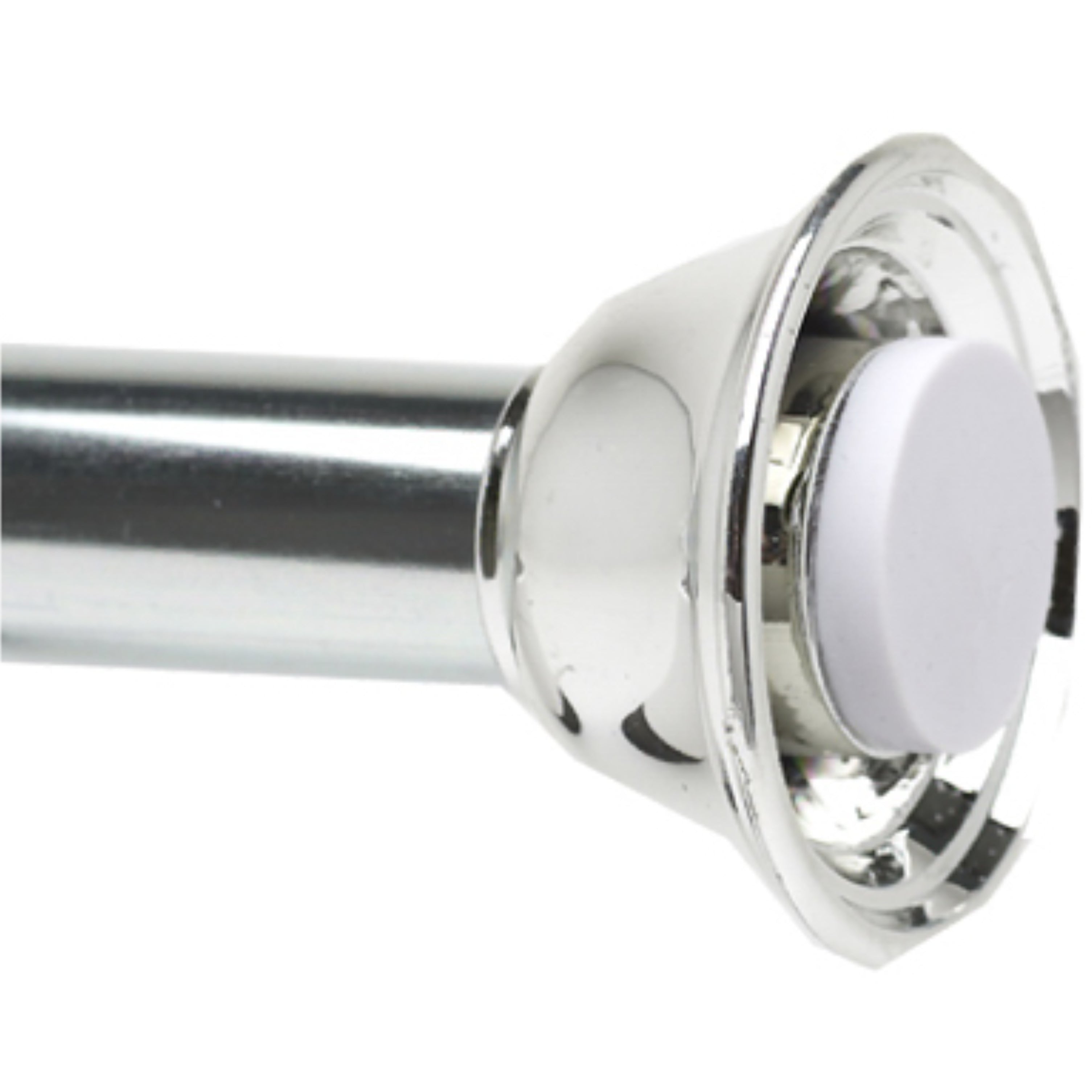

Barra de tensión ajustable mínima cromada para bañeras estándar - 42" a 72" de ancho
Precio de venta24.99

Recently viewed
Frequently Asked Questions
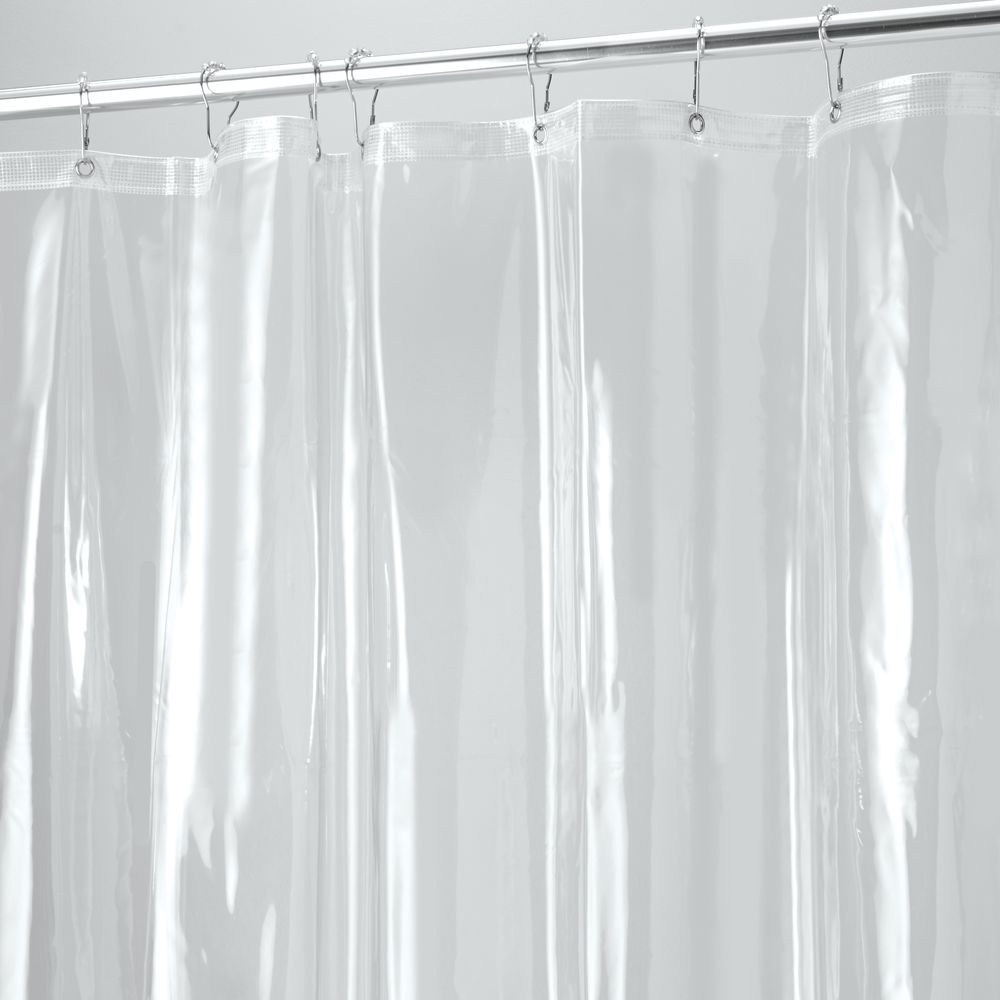
You do not need both if your curtain is already waterproof, and every curtain on this page is. The curtain is the panel you see, and the liner is the waterproof panel that keeps water in the tub, so a common setup hangs a fabric curtain outside with a plastic liner behind it. Because everything here is waterproof plastic, a single PEVA, EVA, or vinyl panel can face the room and hold the water on its own, and iDesign labels the PEVA and EVA designs fully waterproof with no liner needed. A separate clear liner helps only if you want to hang it behind a fabric curtain you already own or add a second waterproof layer for a heavy-splash shower.
It depends on whether you want toughness or no PVC. Clear vinyl liners are the most durable: 4.8 gauge for everyday use and 10 gauge for the longest wear, and both are chlorine-free. The PVC-free options are EVA and PEVA, with EVA generally the sturdier of the two and PEVA the lighter everyday choice. EVA and PEVA skip the chlorine and the strong smell of traditional vinyl, though they tend to feel thinner.
Price mostly depends on thickness and material. A heavier gauge lasts longer and costs more, which is why the 10-gauge commercial vinyl liner costs more than the everyday 4.8-gauge one. A printed PEVA or EVA curtain costs more than a plain clear liner because you are paying for the design and the PVC-free material, not only the waterproofing. Orders over $50 ship free, and same-day Upper East Side delivery is available for orders placed before 2 pm.
The ones labeled mold- and mildew-resistant are, and that covers both clear vinyl liners and EVA curtains. They are built to resist the mold and soap scum that grow in a warm, wet, enclosed shower. Resistant isn't the same as immune, so any plastic liner still needs to dry out and be cleaned to stay that way.
The PEVA and EVA curtains are PVC-free, while the vinyl liners are chlorine-free vinyl, which is still PVC. PVC-free plastics off-gas far less and carry little of the strong plastic smell people notice on a new curtain. Any new panel can give off a faint odor at first, so it is worth airing out before you close it in the shower. If low odor and no PVC matter most to you, choose the EVA or PEVA designs.
Choose the size that matches your rod and overlaps the tub. 72 by 72 inches is the standard for a typical 60-inch tub with room to spare. Narrow stall showers take a 54 by 78 inch curtain, and taller ceilings or a high rod call for an extra-long 72 by 84 inch. Measure the width of your rod and the drop from the rings to a few inches below the tub edge before you choose. The 4.8 gauge clear vinyl liner comes in all three sizes, so for a stall or extra-long shower, choose that liner, since the printed designs are 72 by 72 only.
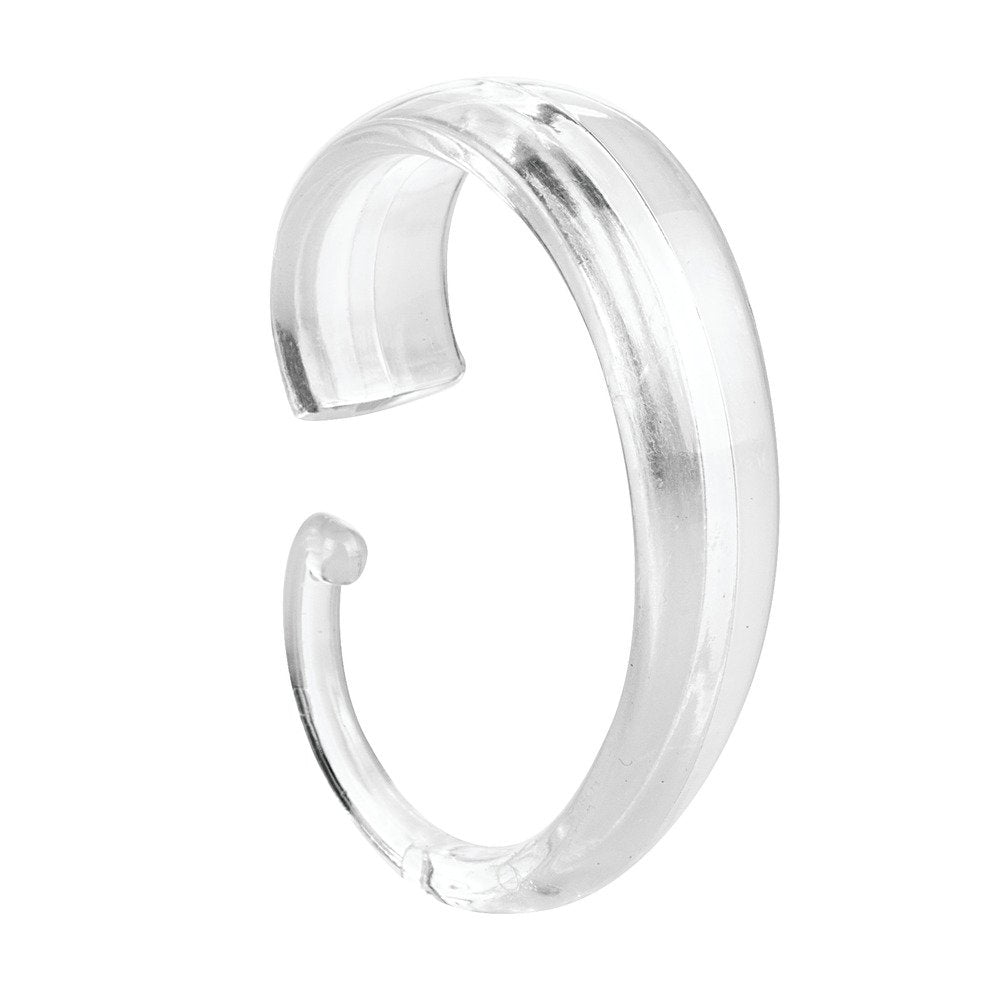
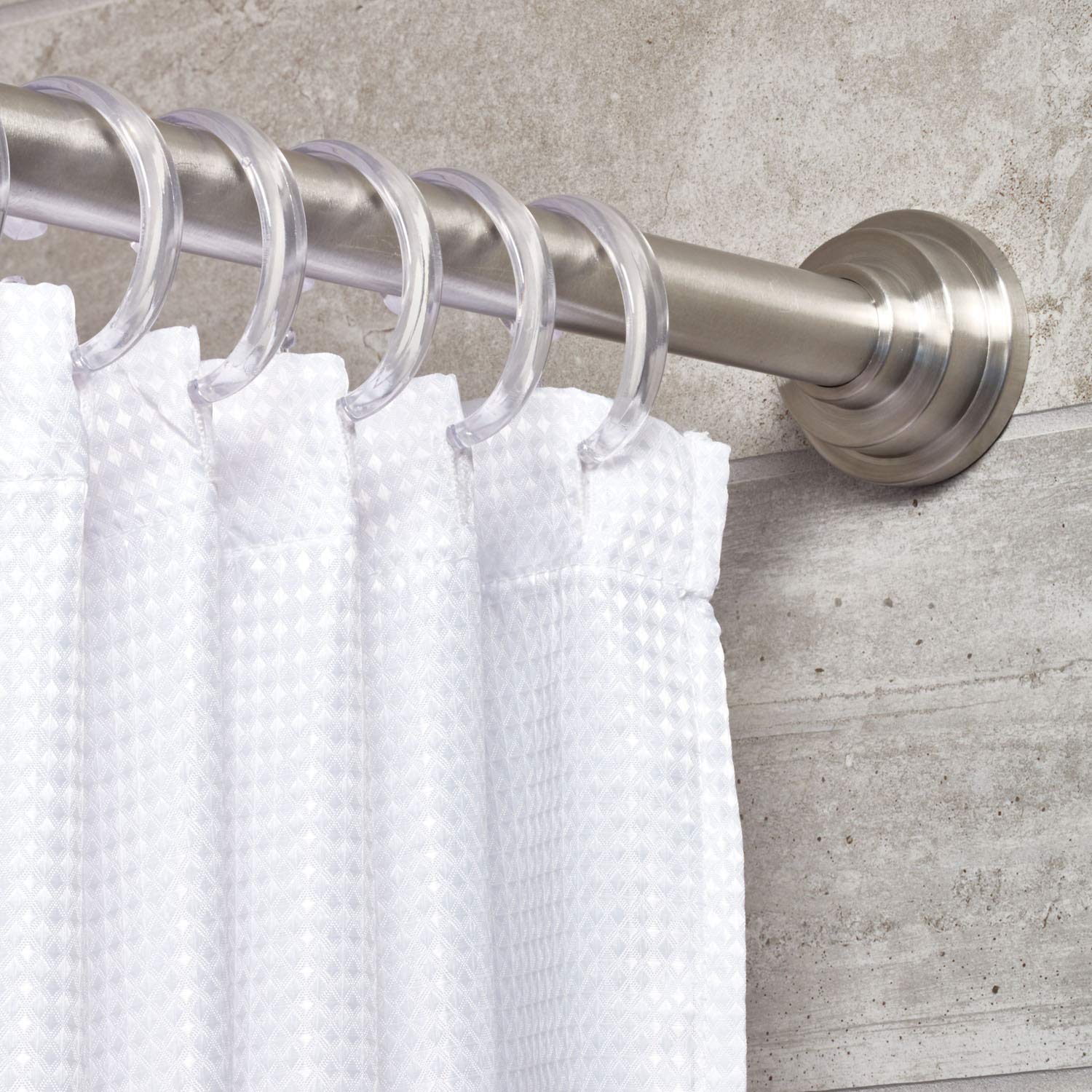
You need 12 hooks or rings, because the curtains and liners here hang from 12 grommets or reinforced buttonholes (the vinyl liners and EVA curtains use rust-resistant metal grommets, while the PEVA prints use reinforced buttonholes). You can use plastic C-hooks or steel roller rings that glide open and shut, and this collection includes both in 12-packs, along with a no-drill tension rod that twists tight to fit a 42- to 72-inch opening. If you are setting up a shower from scratch, you only need the rod, a set of rings, and a curtain, and you can find the rest of the bathroom in our bath collection.
To keep a plastic liner clean and mold-free, rinse it and spread it out to dry after each shower so water doesn't sit in the folds. Once a month, wipe it down or spray it with equal parts white vinegar and water to lift soap scum and the pink and black film before it sets in. Most plastic liners can also go in the washing machine on cold with a couple of towels, then hang to air dry rather than tumble. Even with good care, replace a plastic liner every 6 to 12 months.
To stop a curtain from billowing in and clinging to you, use a liner with a weighted hem that anchors the bottom against the tub. These clear vinyl liners have a weighted magnetic hem for exactly that: they hold the bottom edge down and against the wall so the draft cannot pull it inward. Leaving a few inches of the hem inside the tub lip also breaks the airflow that causes the billow in the first place.